
Commodity Trading Software India: Navigating Mandi Procurement, GST, and MCX Hedging
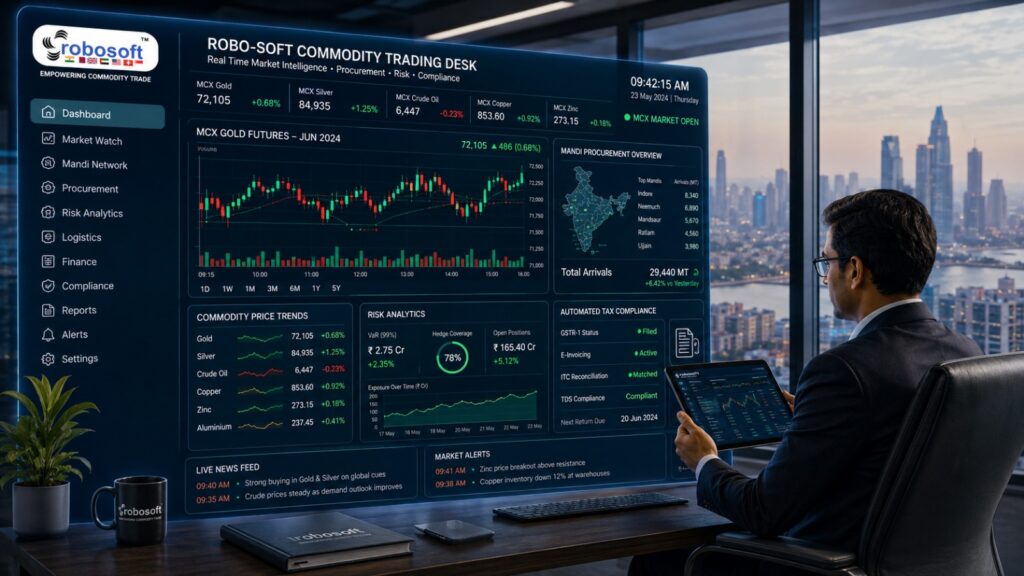
Deploying specialized Commodity trading software India has become essential for commercial trading desks managing domestic procurement and export supply chains. Indian physical commodity houses operate across hundreds of state-regulated agricultural markets (APMC mandis), complex tax slabs, and volatile exchange prices. In addition, manual spreadsheets cannot calculate multi-state Goods and Services Tax (GST) allocations and mandi taxes in real time. Therefore, agribusinesses and metal merchants implement connected enterprise platforms to automate procurement settlements. Consequently, commercial desks eliminate billing leaks, prevent regulatory penalties, and protect operating margins.
The Operational Complexity of Domestic Mandi Procurement
Physical commodity trading in India involves fragmented physical procurement across regional agricultural produce market committees (APMC). Raw commodities like soybeans, mustard seed, cotton, wheat, and pulses arrive at local mandis with variable moisture and foreign matter.
Furthermore, trade terms differ significantly across state borders. When trading desks manage multi-state procurement on disconnected spreadsheets, several critical operational problems arise:
- Mandi Tax Reconciliation Errors: Every state charges distinct APMC cess rates, market development fees, and commission agent (arhatiya) charges.
- Weighbridge and Quality Discrepancies: Moisture shrinkage and bagging differences between mandi loading points and plant delivery weighbridges create inventory losses.
- Delayed Payment Settlement: Farmers and local commission agents demand fast settlements, but manual voucher checking slows down cash disbursements.
Managing State APMC Cess, GST Input Tax Credits, and e-Way Bills
Domestic commodity movements require strict adherence to national tax and logistics mandates.
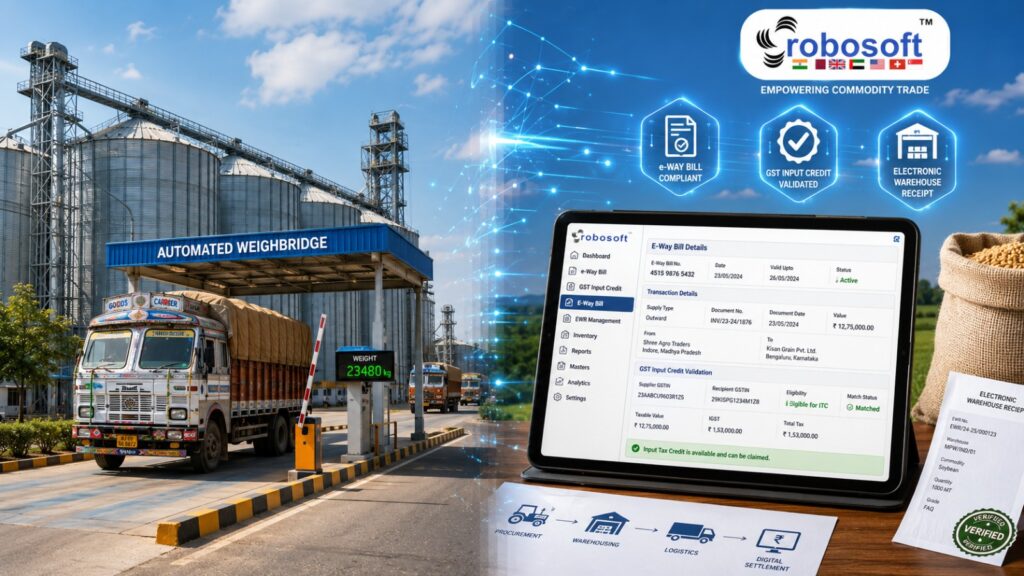
First, physical movements exceeding statutory value thresholds require active electronic waybills (e-Way bills) before transport vehicles leave the mandi. Next, finance teams must reconcile Reverse Charge Mechanism (RCM) liabilities for transport and agricultural purchases. Finally, export desks must track inverted duty structures to claim prompt Input Tax Credit (ITC) refunds from tax authorities.
Because standard accounting software cannot link physical weighbridge slips with real-time tax invoices, finance teams experience compliance delays. Therefore, commercial desks require automated trade ledgers to reconcile tax filings and maintain clean audit trails.
Procurement and Tax Execution Lifecycle
- Material: 5,000 MT Soya / Mustard Seed across MP & Rajasthan Mandis
- Inbound Quality: 11.5% Moisture | 2.0% Foreign Matter | APMC Cess (1.5%)
- Automated e-Way Bill Generated via Direct NIC Portal Integration
- Quality Deduction Scale Applied | Reverse Charge (RCM) & ITC Tracked
- Live Commodity Hedge Matched: NCDEX Agri / MCX Derivative Short Positions
- Factory Gate Net Weight Reconciled | Direct Bank Payout to Arhatiya Issued
Why Modern Commodity Trading Software India Solves Operational Friction
Agribusinesses and metals trading houses implement purpose-built Commodity trading software India to unify front-line mandi operations with corporate finance.
Core Functional Capabilities
A dedicated Commodity trading software India solution automates vital commercial workflows:
- Automated Mandi Tax Calculation: The system calculates state-specific APMC cess, rural development fees, and handling charges automatically.
- Quality Scale Deductions: It applies contractual discount and premium matrices for moisture, oil content, and impurity levels on spot tickets.
- Integrated Weighbridge Connectivity: It connects digital weighbridge scales directly with trade purchase tickets to eliminate manual weight manipulation.
Furthermore, deploying purpose-built Commodity trading software India ensures that plant managers and treasury teams maintain complete visibility over landed cost parity across diverse sourcing states.
Connecting Physical Mandi Deliveries with MCX and NCDEX Derivatives
Indian commodity trading desks manage high price volatility on domestic commodity derivatives exchanges. Desks trading metals, crude oil, and agricultural crops reference futures contracts on the Multi Commodity Exchange (MCX) and National Commodity and Derivatives Exchange (NCDEX).
The system evaluates the net landed procurement cost using dynamic regional formulas:
Net Landed Mandi Parity = (Base Auction Price + APMC Cess + Arhat Commission) + Freight + Handling – Quality Deductions ± Exchange Basis
Net Hedged Margin = Delivery Sale Realization – Net Landed Mandi Parity ± (Futures Fixation Price – Futures Exit Price)
Because spot market basis levels fluctuate across state borders, unhedged procurement desks face margin compression. Integrated trading platforms link physical mandi arrivals directly with offsetting derivative positions. As a result, risk managers protect trade profitability against unexpected price drops during transit.
Electronic Negotiable Warehouse Receipts and WDRA Integration
Physical commodity storage in India relies increasingly on scientific warehousing and electronic finance.
Under the regulatory framework of the Warehousing Development and Regulatory Authority (WDRA), registered depositories issue Electronic Negotiable Warehouse Receipts (e-NWR). Modern trading platforms synchronize directly with electronic commodity repositories such as CCRL and NERL.
Consequently, trading houses can pledge stored commodity receipts to commercial banks for instant working capital loans. Therefore, treasury managers optimize borrowing costs and monitor collateral margins without handling vulnerable physical paper receipts.
Feature Comparison: Generic ERP vs. Specialized Indian CTRM
Standard corporate enterprise software cannot support the multi-state agricultural and metal trading workflows used across India:
| Operational Feature | Generic Corporate ERP (e.g., Tally, SAP) | Specialized Indian CTRM (Robosoft) |
|---|---|---|
| APMC Mandi Tax Logic | Requires manual calculation and customized journal entries. | Automates state-specific cess and commission agent fees per mandi. |
| e-Way Bill Automation | Involves manual entry on external government portals. | Generates and verifies e-Way bills via direct API connectivity. |
| Quality Assay Deductions | Tracks basic gross weight without moisture penalty tables. | Applies automated discount matrices based on lab assay results. |
| MCX / NCDEX Hedging | Treats derivatives as disconnected accounting ledgers. | Links physical purchase contracts with derivative hedge positions. |
| Microsoft Dynamics 365 Core | Relies on custom third-party database connectors. | Runs natively inside Dynamics 365 Business Central and F&O. |
Statutory Directives and Regulatory Standards
Physical commodity trading and derivative hedging in India must comply with established statutory and market regulations.
Domestic indirect tax compliance, input credit reconciliation, and e-Way bill rules follow directives governed by the Goods and Services Tax Council of India.
In addition, derivative contract execution and physical commodity deliveries adhere to market regulations established by the Multi Commodity Exchange of India (MCX).
Furthermore, accredited warehouse management and electronic receipt financing must follow standards set by the Warehousing Development and Regulatory Authority (WDRA).
Frequently Asked Questions About Commodity Trading Software India
1. What is the primary role of commodity trading software in India?
It automates physical mandi procurement, calculates APMC taxes, manages GST and e-Way bills, tracks electronic warehouse receipts, and connects physical positions with MCX and NCDEX derivatives.
2. Why is specialized Commodity trading software India necessary for multi-state operations?
Dedicated Commodity trading software India applies state-specific APMC cess and tax deductions automatically. Therefore, trading desks avoid manual tax errors and maintain compliant cross-border trade records.
3. How does the software integrate with digital weighbridges?
The system captures truck gross and tare weights directly from weighbridge automation hardware. Consequently, operations teams eliminate manual data entry and catch in-transit moisture shrinkage immediately.
4. Can the platform manage electronic Negotiable Warehouse Receipts (e-NWR)?
Yes. The platform connects with registered electronic repositories to monitor pledged warehouse receipts, loan-to-value limits, and bank collateral releases.
5. How does Robosoft connect with Microsoft Dynamics 365?
Robosoft operates natively inside Microsoft Dynamics 365 data structures. As a result, mandi purchase tickets, transport costs, and general ledger accounts synchronize simultaneously with zero data delay.
6. What commodities are supported across Indian trading desks?
The platform supports agricultural crops, oilseeds, edible oils, pulses, cotton, grains, base metals, bullion, and energy commodities.
Next Steps for Indian Trading Desks
Streamlining domestic mandi procurement, automating GST compliance, and managing exchange price risk requires a purpose-built commodity management platform.
- Discover how our agro CTRM software for grain traders optimizes agricultural supply chains on Microsoft Dynamics 365.
- Explore our specialized Robosoft physical metal CTRM platform to manage domestic and export metal flows.
- Learn more about our unified Microsoft Dynamics 365 commodity ERP to eliminate disconnected business systems.
- Contact our commodity technology specialists through our Robosoft Contact Page to schedule a live product demonstration.